The Liver Tumor Segmentation Benchmark (LiTS)
Feb 1, 2023·,,,,,,, ,,,,,,,,,,,,,,,,,,,,,,,,,,,,,,,,,,,,,,,,,,,,,,,,,,,,,,,,,,,,,,,,,,,,,,,,,,,,,,,,,,,,,,,,,,,,,,,,,,,,·
0 min read
,,,,,,,,,,,,,,,,,,,,,,,,,,,,,,,,,,,,,,,,,,,,,,,,,,,,,,,,,,,,,,,,,,,,,,,,,,,,,,,,,,,,,,,,,,,,,,,,,,,,·
0 min read
Patrick Bilic
Patrick Christ
Hongwei Bran Li
Eugene Vorontsov
Avi Ben-Cohen
Georgios Kaissis
Adi Szeskin
Colin Jacobs
Gabriel Humpire
Gabriel Chartrand
Fabian Lohöfer
Julian Walter Holch
Wieland Sommer
Felix Hofmann
Alexandre Hostettler
Naama Lev-Cohain
Michal Drozdzal
Michal Marianne Amitai
Refael Vivanti
Jacob Sosna
Ivan Ezhov
Anjany Sekuboyina
Fernando Navarro
Florian Kofler
Johannes C Paetzold
Suprosanna Shit
Xiaobin Hu
Jana Lipková
Markus Rempfler
Marie Piraud
Jan Kirschke
Benedikt Wiestler
Zhiheng Zhang
Christian Hülsemeyer
Marcel Beetz
Florian Ettlinger
Michela Antonelli
Woong Bae
Míriam Bellver
Lei Bi
Hao Chen
Grzegorz Chlebus
Erik B Dam
Qi Dou
Chi-Wing Fu
Bogdan Georgescu
Xavier Giró-I-Nieto
Felix Gruen
Xu Han
Pheng-Ann Heng
Jürgen Hesser
Jan Hendrik Moltz
Christian Igel
Fabian Isensee
Paul Jäger
Fucang Jia
Krishna Chaitanya Kaluva
Mahendra Khened
Ildoo Kim
Jae-Hun Kim
Sungwoong Kim
Simon Kohl
Tomasz Konopczynski
Avinash Kori
Ganapathy Krishnamurthi
Fan Li
Hongchao Li
Junbo Li
Xiaomeng Li
John Lowengrub
Jun Ma
Klaus Maier-Hein
Kevis-Kokitsi Maninis
Hans Meine
Dorit Merhof
Akshay Pai
Mathias Perslev
Jens Petersen
Jordi Pont-Tuset
Jin Qi
Xiaojuan Qi
Oliver Rippel
Karsten Roth
Ignacio Sarasua
Andrea Schenk
Zengming Shen
Jordi Torres
Christian Wachinger
Chunliang Wang
Leon Weninger
Jianrong Wu
Daguang Xu
Xiaoping Yang
Simon Chun-Ho Yu
Yading Yuan
Miao Yue
Liping Zhang
Jorge Cardoso
Spyridon Bakas
Rickmer Braren
Volker Heinemann
Christopher Pal
An Tang
Samuel Kadoury
Luc Soler
Bram Van Ginneken
Hayit Greenspan
Leo Joskowicz
Bjoern Menze
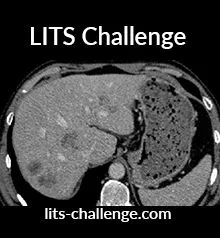 Image credit: Unsplash
Abstract
In this work, we report the set-up and results of the Liver Tumor Segmentation Benchmark (LiTS), which was organized in conjunction with the IEEE International Symposium on Biomedical Imaging (ISBI) 2017 and the International Conferences on Medical Image Computing and Computer-Assisted Intervention (MICCAI) 2017 and 2018. The image dataset is diverse and contains primary and secondary tumors with varied sizes and appearances with various lesion-to-background levels (hyper-/hypo-dense), created in collaboration with seven hospitals and research institutions. Seventy-five submitted liver and liver tumor segmentation algorithms were trained on a set of 131 computed tomography (CT) volumes and were tested on 70 unseen test images acquired from different patients. We found that not a single algorithm performed best for both liver and liver tumors in the three events. The best liver segmentation algorithm achieved a Dice score of 0.963, whereas, for tumor segmentation, the best algorithms achieved Dices scores of 0.674 (ISBI 2017), 0.702 (MICCAI 2017), and 0.739 (MICCAI 2018). Retrospectively, we performed additional analysis on liver tumor detection and revealed that not all top-performing segmentation algorithms worked well for tumor detection. The best liver tumor detection method achieved a lesion-wise recall of 0.458 (ISBI 2017), 0.515 (MICCAI 2017), and 0.554 (MICCAI 2018), indicating the need for further research. LiTS remains an active benchmark and resource for research, e.g., contributing the liver-related segmentation tasks in http://medicaldecathlon.com/. In addition, both data and online evaluation are accessible via https://competitions.codalab.org/competitions/17094.
Type
Publication
Medical Image Analysis 84, 102680
